Fine-Detail Brand Logo Patches
Consider flat, thread-woven patches for intricate brand marks, narrow borders and compact typography on accessories and apparel. Verify small text at actual size.
CUSTOM WOVEN PATCHES & FABRIC LOGO BADGES
Build crisp, low-profile woven fabric emblems for apparel labels, club badges, retail merchandise and detailed brand artwork.
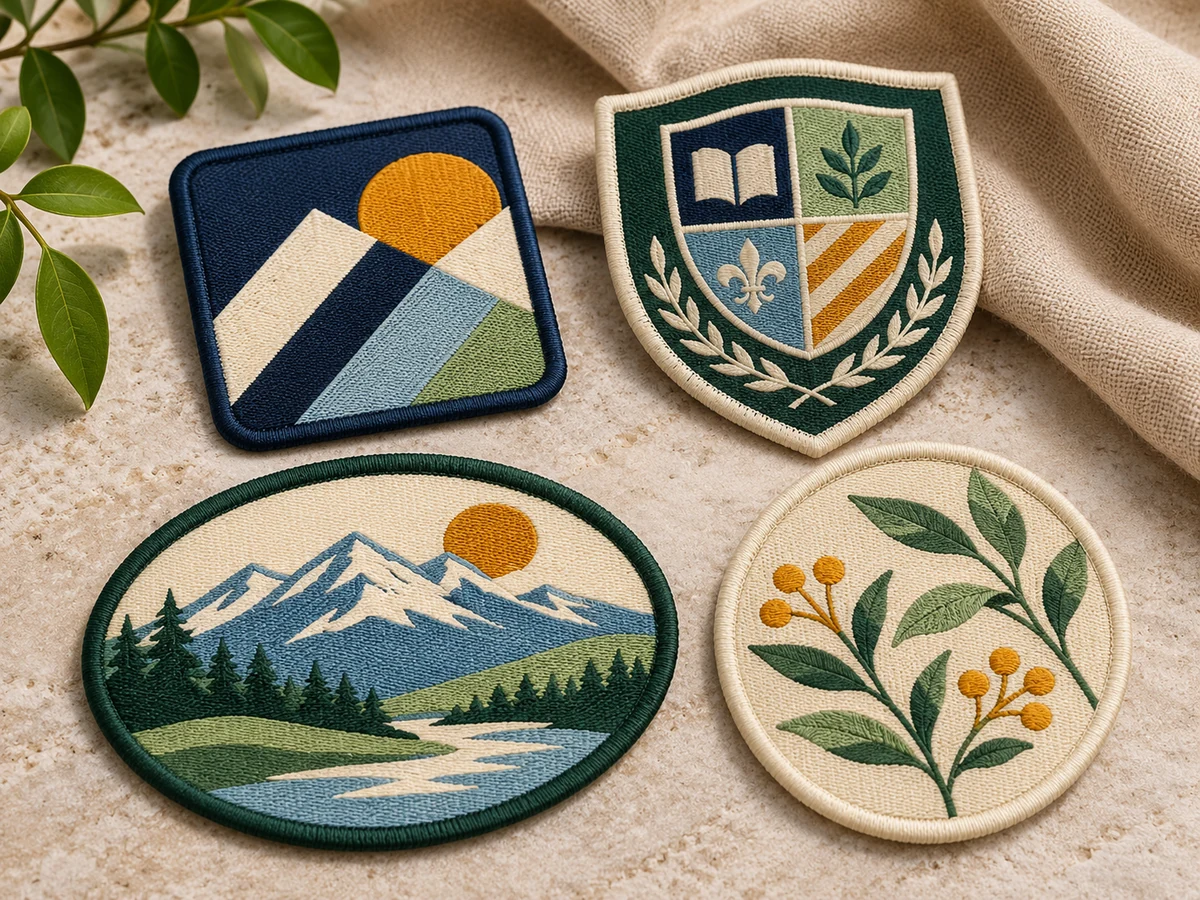
PRODUCT STYLES & GALLERY
Choose a style to understand which shapes, artwork and uses suit your project.
Consider flat, thread-woven patches for intricate brand marks, narrow borders and compact typography on accessories and apparel. Verify small text at actual size.
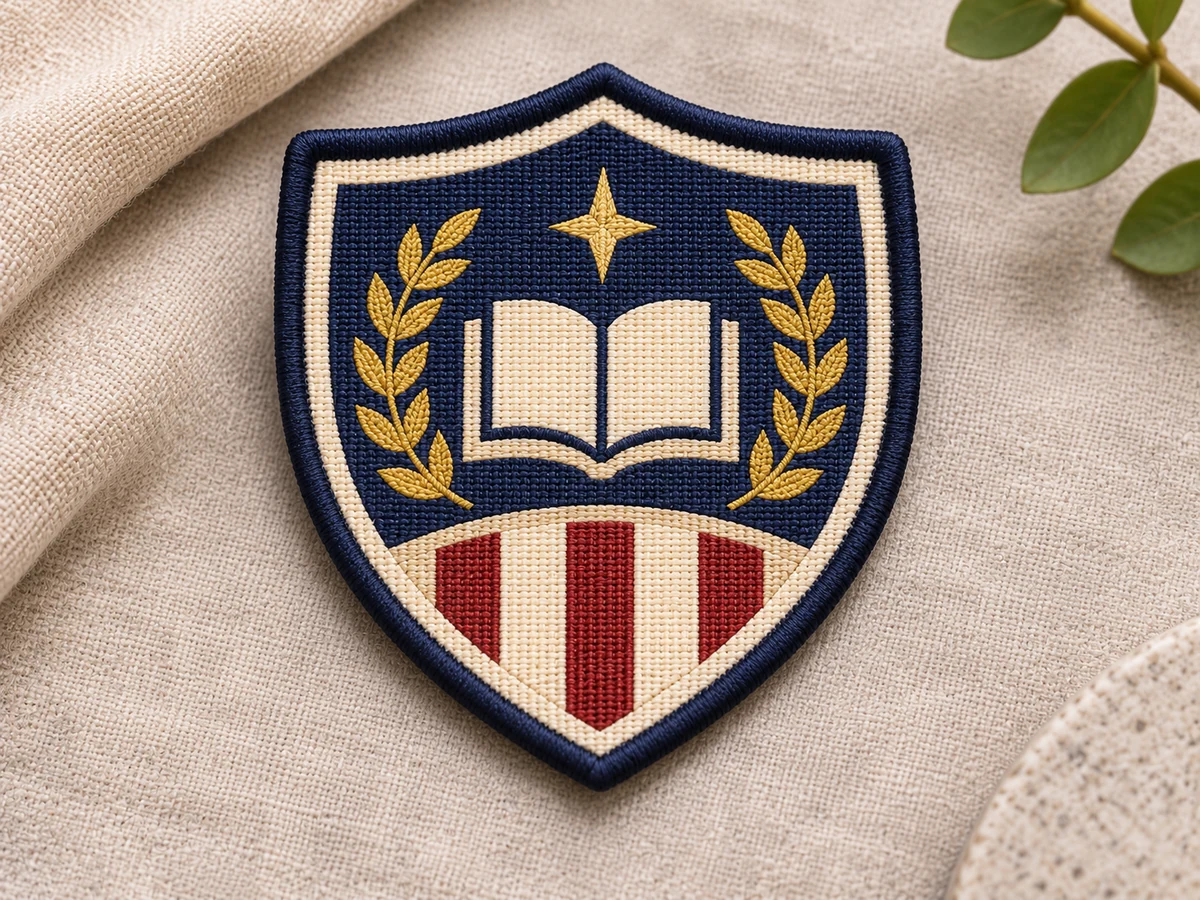
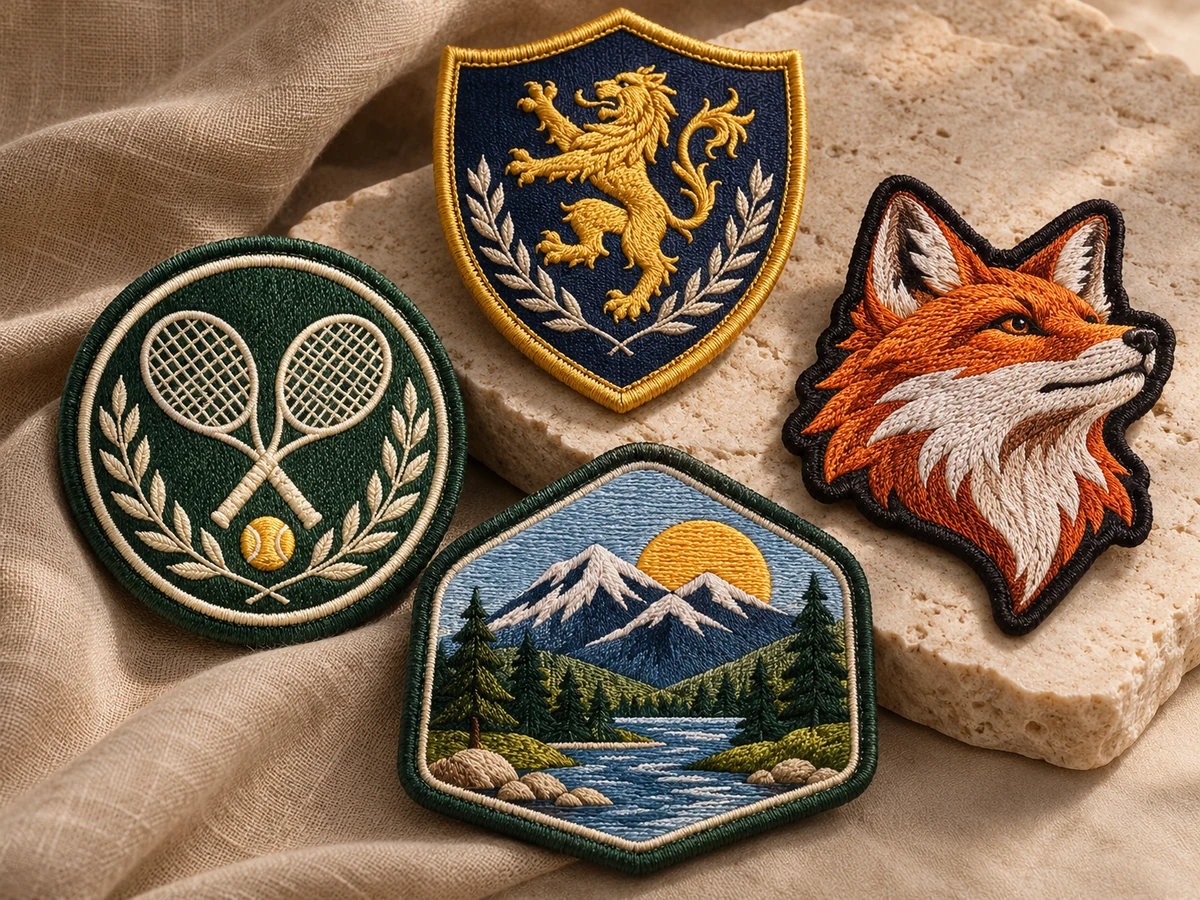
Use woven club, team and academic emblems when line detail and small crest lettering may be difficult in bulkier embroidery.
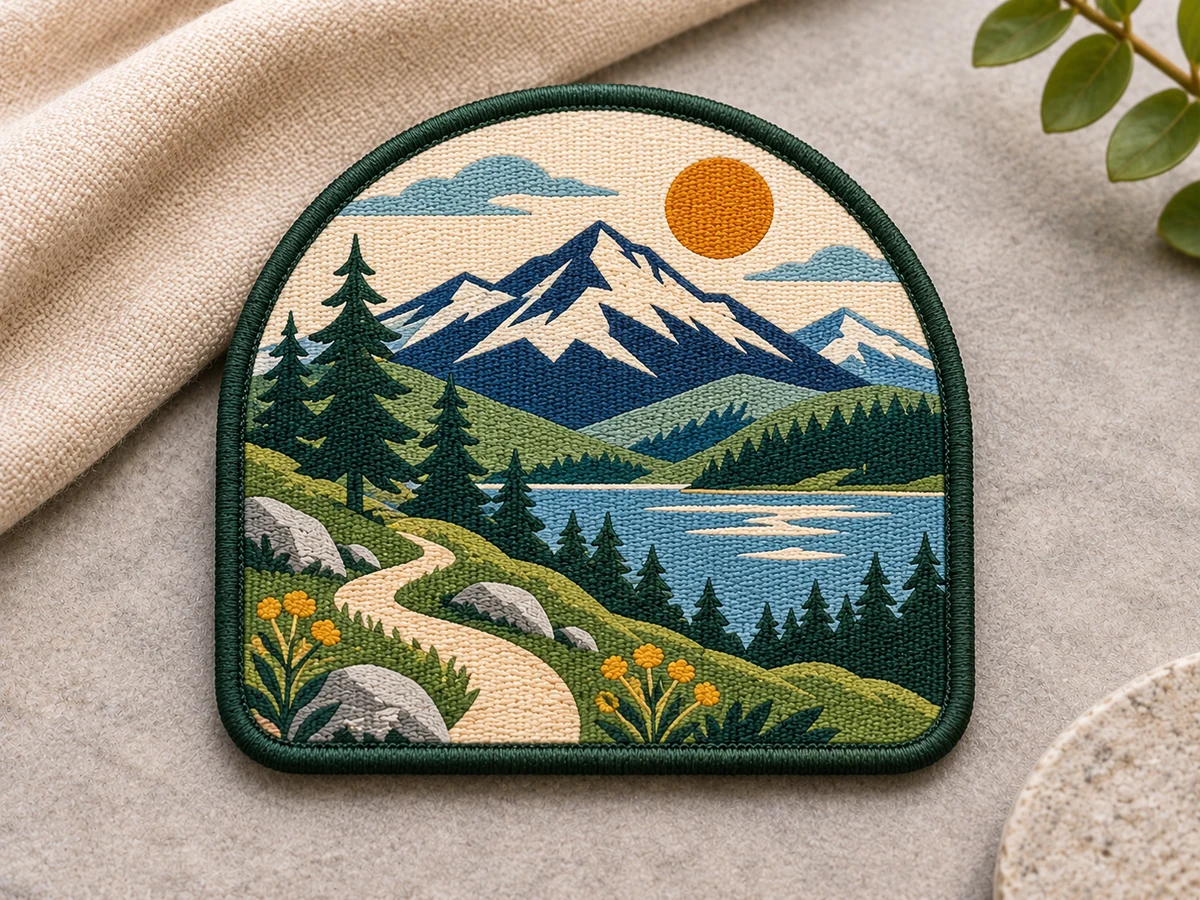
Develop destination graphics, park landscapes or licensed illustration concepts with smooth woven color regions and carefully reviewed line separation.
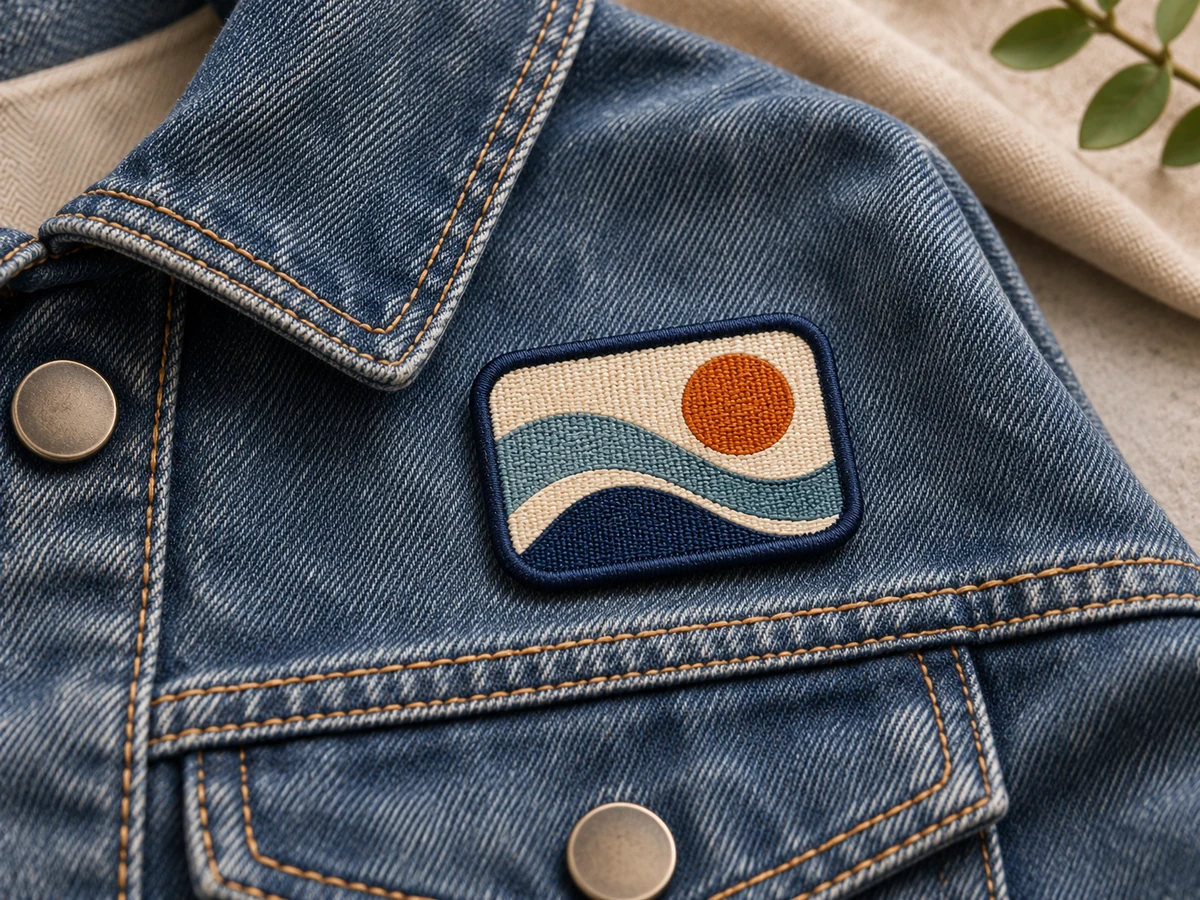
Explore lightweight woven badge applications for caps, jackets, bags and lifestyle merchandise. Placement and finish must suit the actual garment.
CUSTOMIZATION & SPECIFICATIONS
Confirm material, artwork, size, print and attachment details before sampling or quotation.
| Woven construction | Fine colored threads form the artwork directly in a woven substrate rather than raised embroidery stitches applied over an existing fabric base. Exact loom construction and yarn composition require material and sample review. |
|---|---|
| Thread, color & detail | Discuss woven density, thread color matching and line contrast. Smaller lettering and finer artwork may work better than embroidery, and we can review fine-line and lettering legibility using a true-size artwork proof. |
| Shape & finished dimensions | Round, rectangular, shield and irregular-cut patches are possible design directions; shape feasibility and edge clearance depend on the actual finished size. |
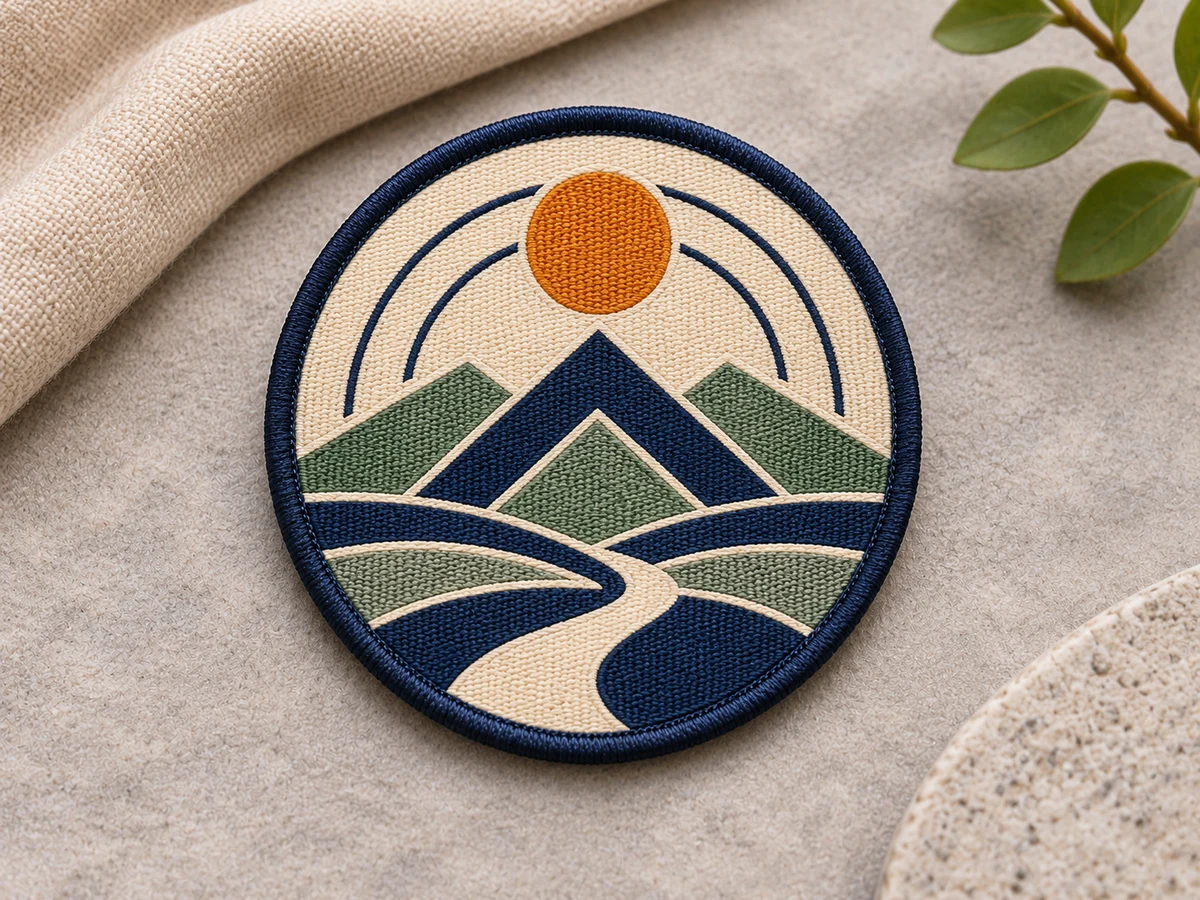
| Edge finishing | Overlocked/merrowed, folded, hot-cut or stitched edges may be reviewed against the chosen construction; not every edge is suitable for every silhouette or fiber. |
| Sew-on attachment | Sewing around the edge is a common permanent attachment. Evaluate garment compatibility, stitch placement and care requirements. |
| Heat-seal option | Iron-on/heat-activated backing can be requested for review; successful application depends on the fabric, pressing process and laundering conditions. |
| Removable backing | Hook-and-loop construction may be relevant for changeable patches if both the patch and garment mating surfaces are specified and sampled. |
| Patch vs garment label | A woven patch is typically an outward-facing badge; a folded woven garment label is a separate product/placement specification and should not be assumed equivalent. |
| Artwork files & sampling | Provide rights-cleared vector graphics when possible, minimum text and line requirements, size in mm, color references and garment or pack photos. Request woven proof and physical sample. |
| MOQ, quote, lead time & certification | Share your dimensions, backing, artwork, quantity, destination and deadline for a tailored quotation and sample plan. We can review any wash or material-documentation requirements. |
ARTWORK & DESIGN FILES
Supply original or licensed artwork, vector format when available, actual finished patch dimensions, precise smallest lettering, requested thread colors, edge and backing, application fabric, quantities by design and destination. Approve a full-size woven proof and physical sample before bulk orders.
PRODUCT SELECTION GUIDE
Compare real product choices rather than selecting a finish by name alone.
Woven patches use finer woven threads and tend to lie flatter; embroidered patches use raised stitches over a base. Favor weaving for detailed linework, while embroidery can suit bold crests that benefit from visible relief. Verify each actual artwork rather than relying on generic thresholds.
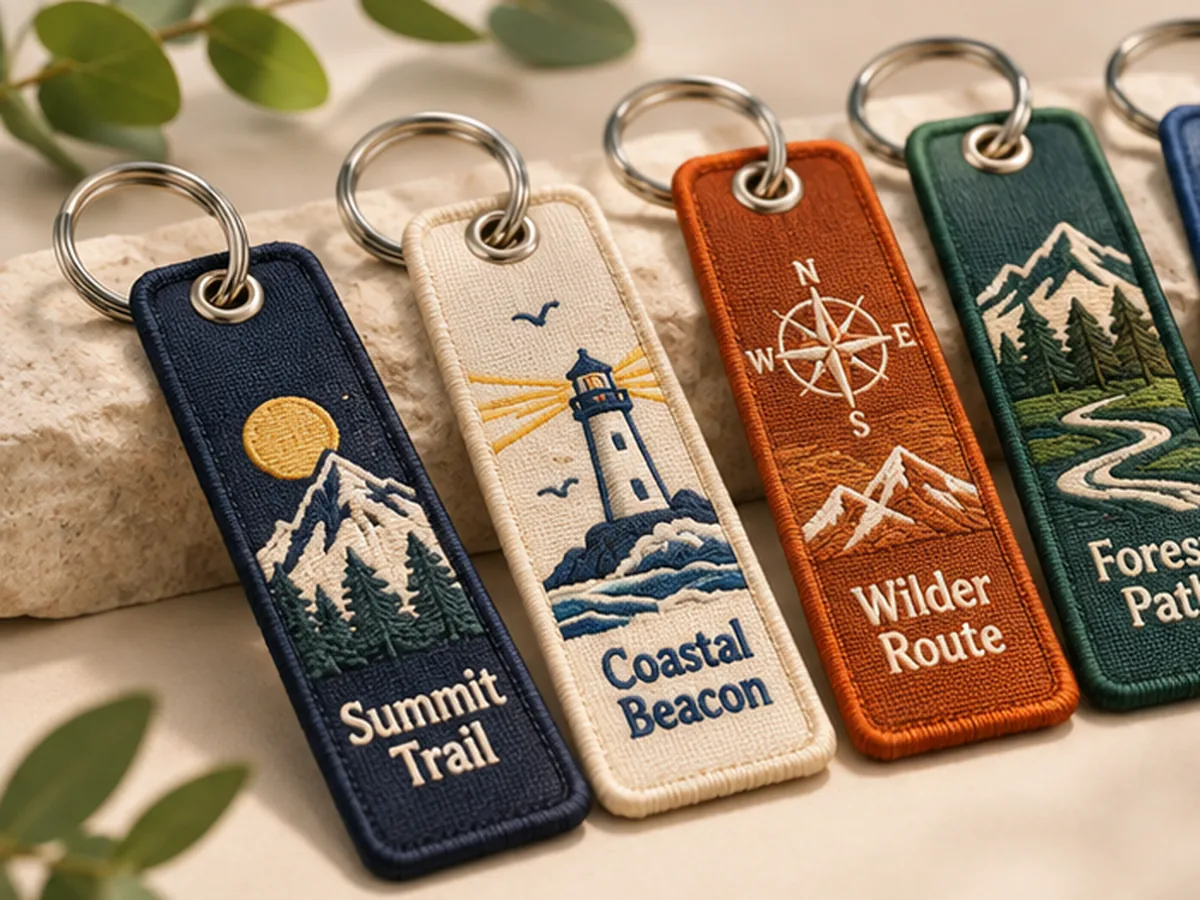
A decorative woven badge is not the same as an internal garment care/brand label or a woven keyring tag. Confirm final placement, finishing and hardware before choosing a product.
Simple shapes may accept overlocked edges; irregular outlines may require heat-cut or stitched methods. Ask for an edge close-up and confirm fraying resistance in samples.
Sew-on, iron-on and hook-and-loop have different trade-offs. Heat treatment and laundering must be validated on the actual garment, especially for sensitive fabrics.
QUANTITY, SAMPLING & DELIVERY
Tell us your artwork and intended quantity. We review the suitable production route before confirming MOQ, sampling and scheduling.
Send original/rights-cleared logo files, target dimensions, quantities per design, wearer or retail use and destination.
Review small type, fine rules, number of colors, edges, and shape at true scale before proposing an approach.
Choose a appropriate border and attachment suited to the garment or accessory, subject to sample approval.
Check contrast, logo proportions, line integrity and textile direction in a documented design proof.
Inspect weave definition, edge construction, attachment and care compatibility; then confirm commercial terms.
Proceed only on approved specifications, confirmed production capacity and packaging/shipping details.
APPLICATIONS & BUYERS
We review projects from different buyer groups according to the actual product and manufacturing requirements.
Fine logos and compact graphic patches for clothing, bags and accessories, with brand rights and garment compatibility reviewed.
Crests, membership patches and team identifiers where fine emblems or small lettering call for woven detail.
Licensed local iconography, map motifs and compact souvenir patches for visitor merchandise.
Woven branded identity patches for events, staff attire and promotional products, subject to actual sampling.
PRODUCT DETAILS
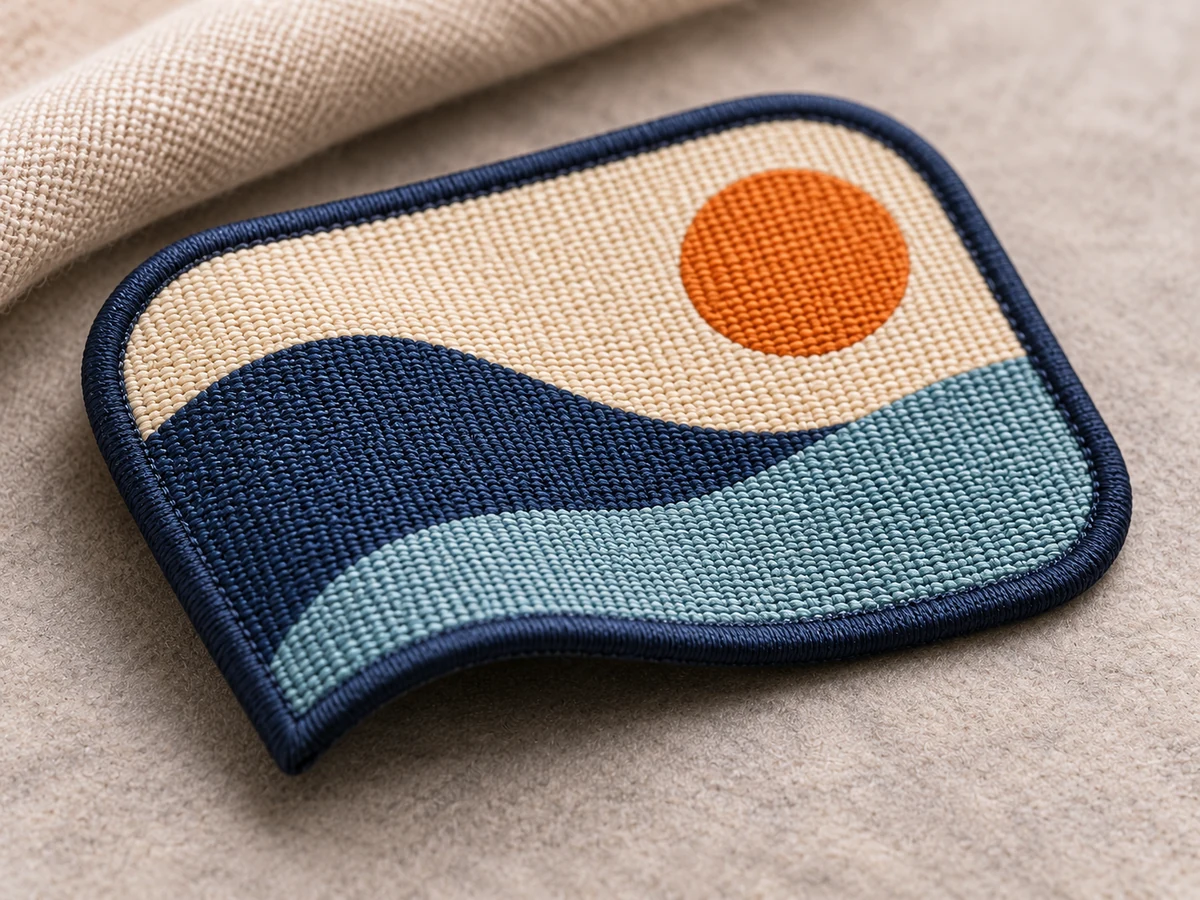
A close-up illustrates low-profile woven thread interlacing and a potential edge finish. Yarn specification, abrasion and wash performance require physical confirmation.
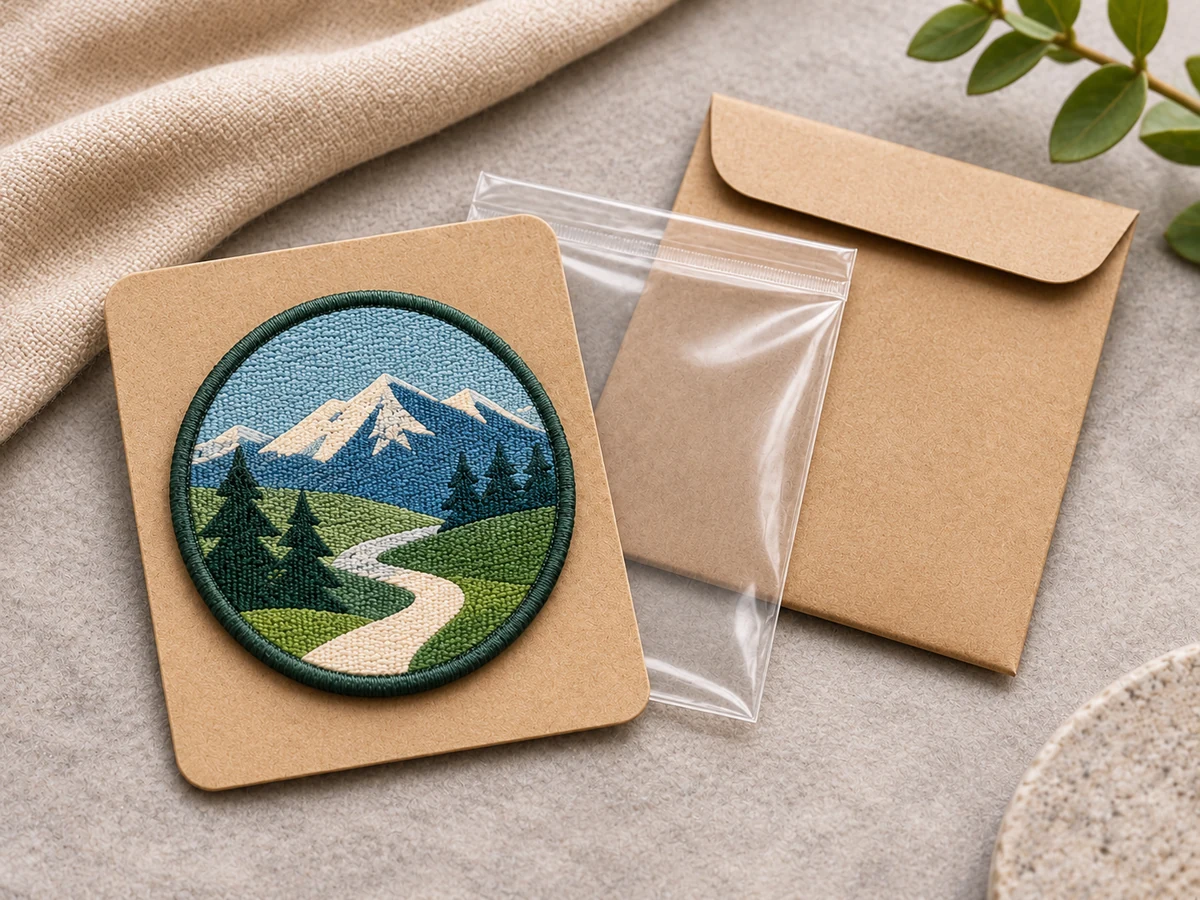
Explore blank backing cards, sleeve packs and grouped gift presentation after actual size and customer packaging requirements are settled.
FAQ
Practical answers to common questions about materials, artwork, order size and development.
It is a fabric badge whose image is created by interweaving threads, producing a relatively smooth and low-profile surface. We can review yarn, edge and attachment options with a representative sample.
Woven patches generally have finer, flatter thread detail, while embroidery builds raised stitch texture. Choose based on your actual design size, smallest text and desired appearance.
They can be a useful choice for fine details, but legibility depends on font, color contrast, size and partner equipment. Request a full-size physical sample and do not rely on a universal minimum.
Artwork, dimensions, colors and possible edge styles can be reviewed with sourcing partners. We can review suitable edging and tolerances on an artwork proof and sample.
These are common market formats worth discussing, but backing availability, suitable fabric, heat conditions and durability must be checked against the selected construction and approved sample.
No. Both can use woven threads, but an outward-facing decorative badge and an internal garment label may have different dimensions, edge finishes, fold types and attachment requirements.
Send your size, design count, quantity per design, backing and packaging preference for a project-specific MOQ, pricing and delivery quotation.
We can discuss matching embroidered patches, fabric keychains and other branded merchandise as a sourcing project. Each construction requires separate specifications and sample approval.
RELATED PRODUCTS
Choose the right decoration method for the artwork and garment, then consider a coordinated branded collection.
START YOUR PROJECT
Share your artwork or idea, intended quantity, approximate size and destination. We can help review the product specification and sourcing options.