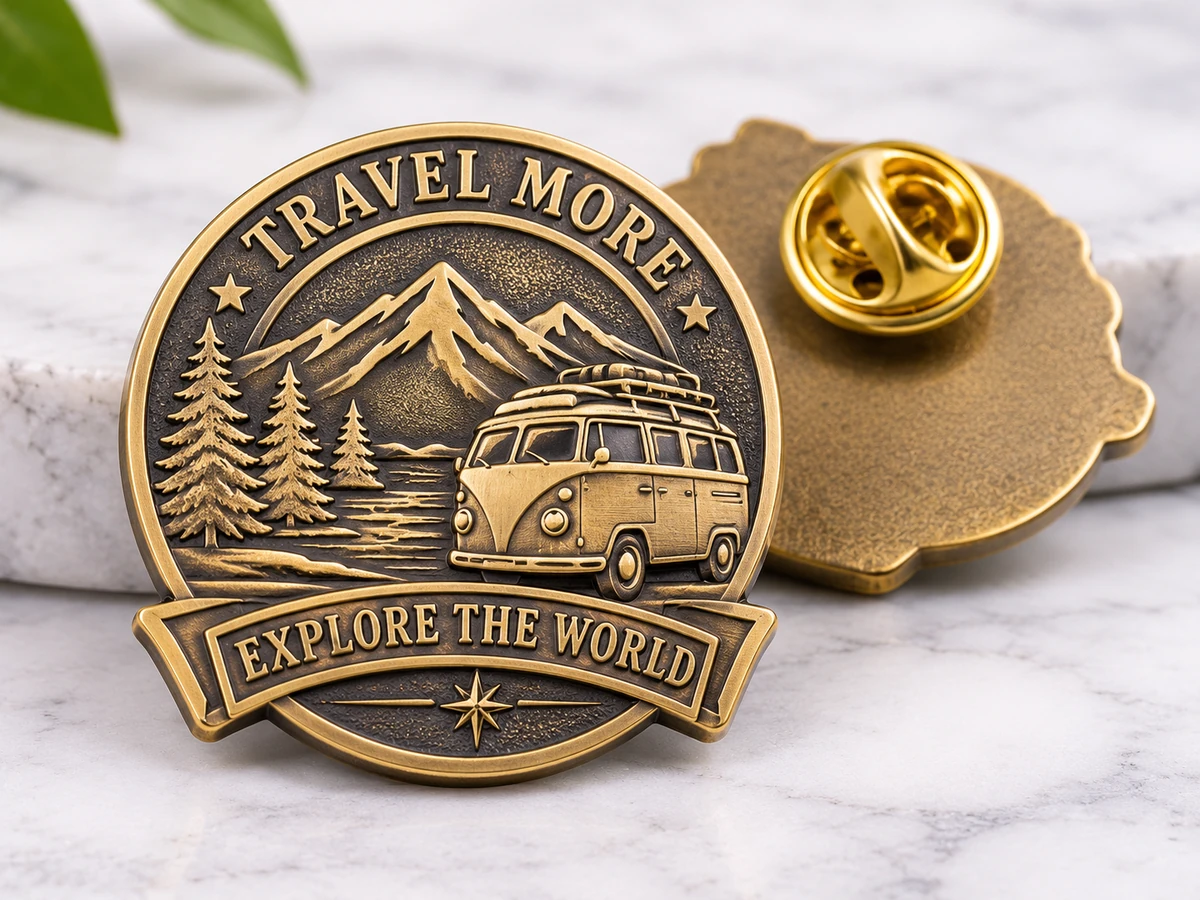
Raised Relief & Recessed Texture
Emphasize high and low metal surfaces in a landmark or emblem design. Review the difference between 2D stamped levels and more sculpted relief with an actual-size tooling drawing and approved physical sample.
CUSTOM DIE-STRUCK METAL PINS
Bring landmarks, original artwork and recognition emblems to life with sculpted metal lines, raised relief and rich finish contrasts—without relying on enamel colour fills.
PRODUCT STYLES & GALLERY
Choose a style to understand which shapes, artwork and uses suit your project.
Emphasize high and low metal surfaces in a landmark or emblem design. Review the difference between 2D stamped levels and more sculpted relief with an actual-size tooling drawing and approved physical sample.
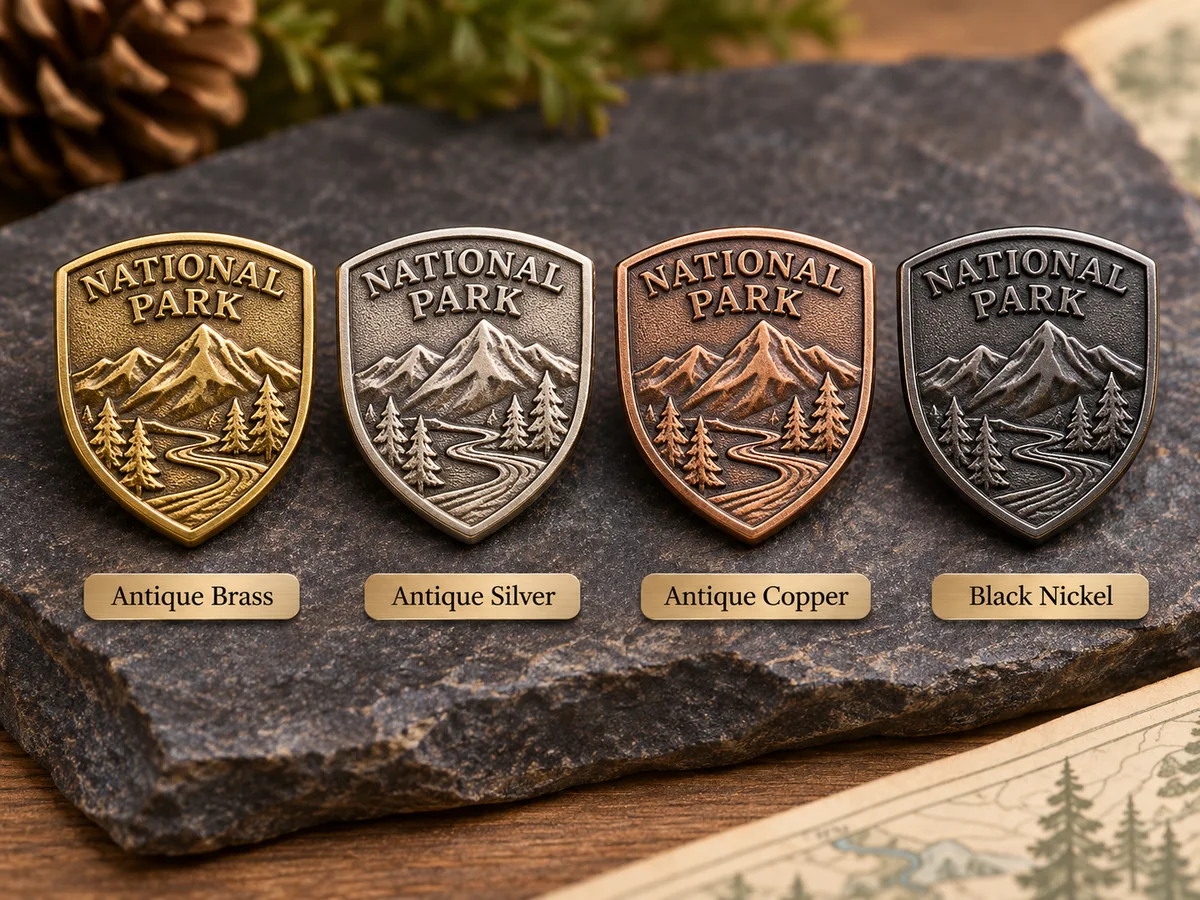
Explore antique brass-tone, silver-tone and other feasible metal finishes. A darkened recess can enhance contrast, while polishing changes the highlights; confirm finish repeatability on samples.
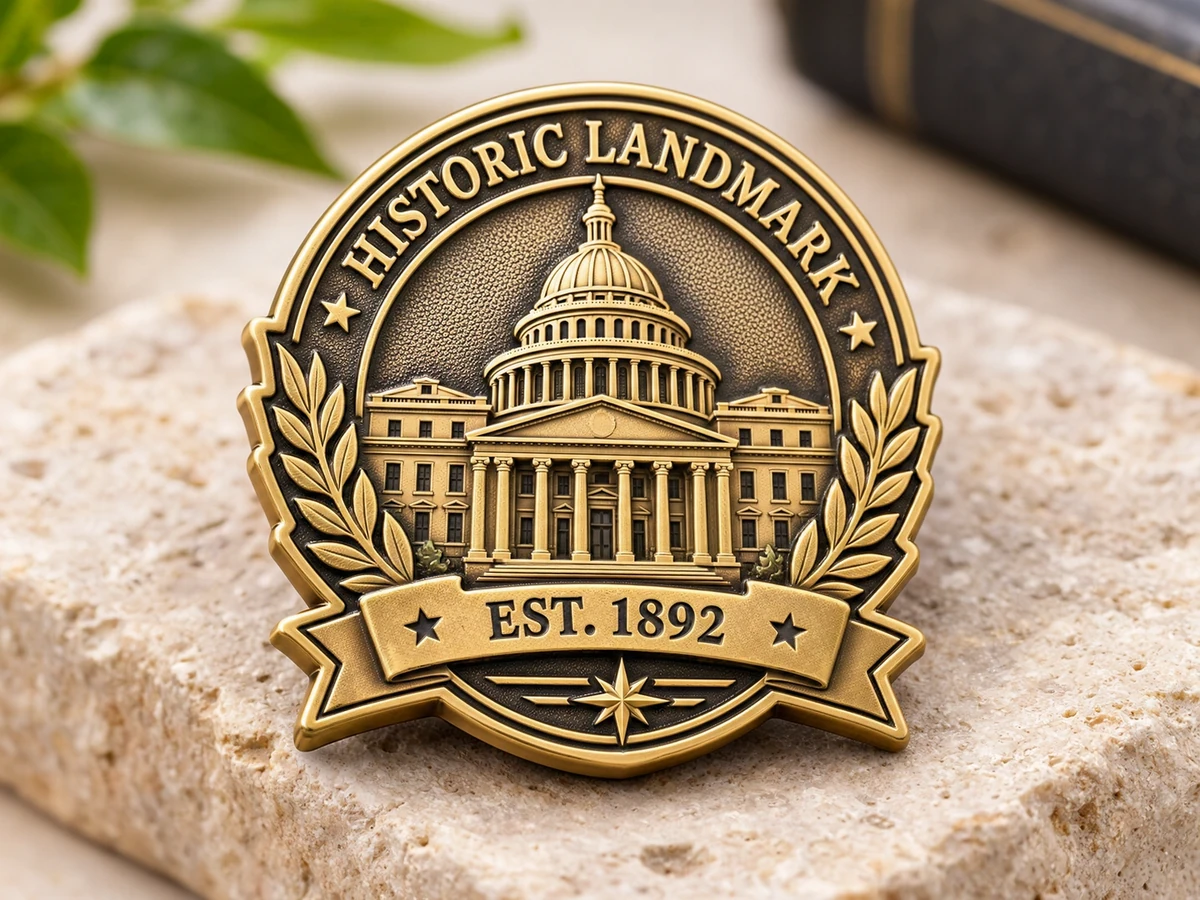
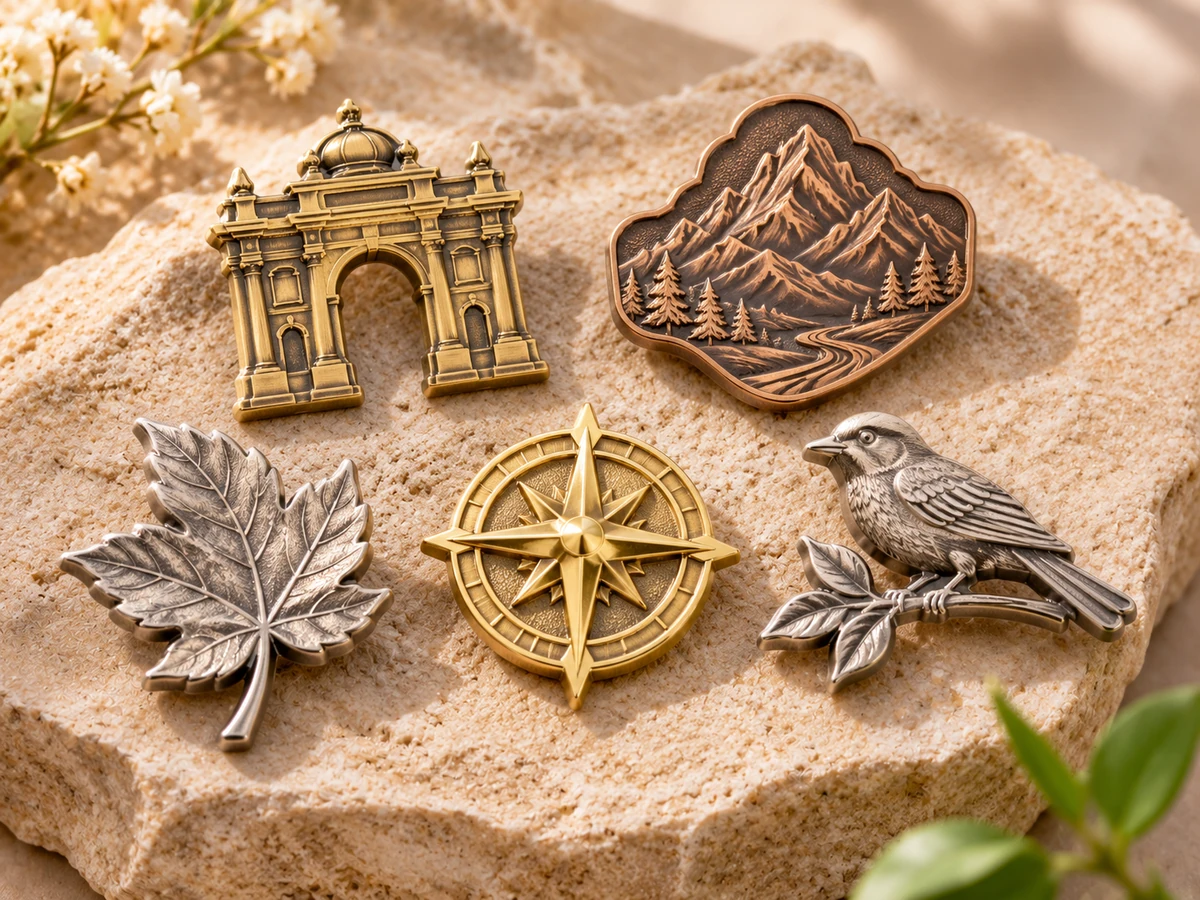
Adapt an original building, leaf, compass or properly licensed insignia to a die-cut outline. Narrow tips, tiny openings and unsupported projections require tooling and sample feasibility review.
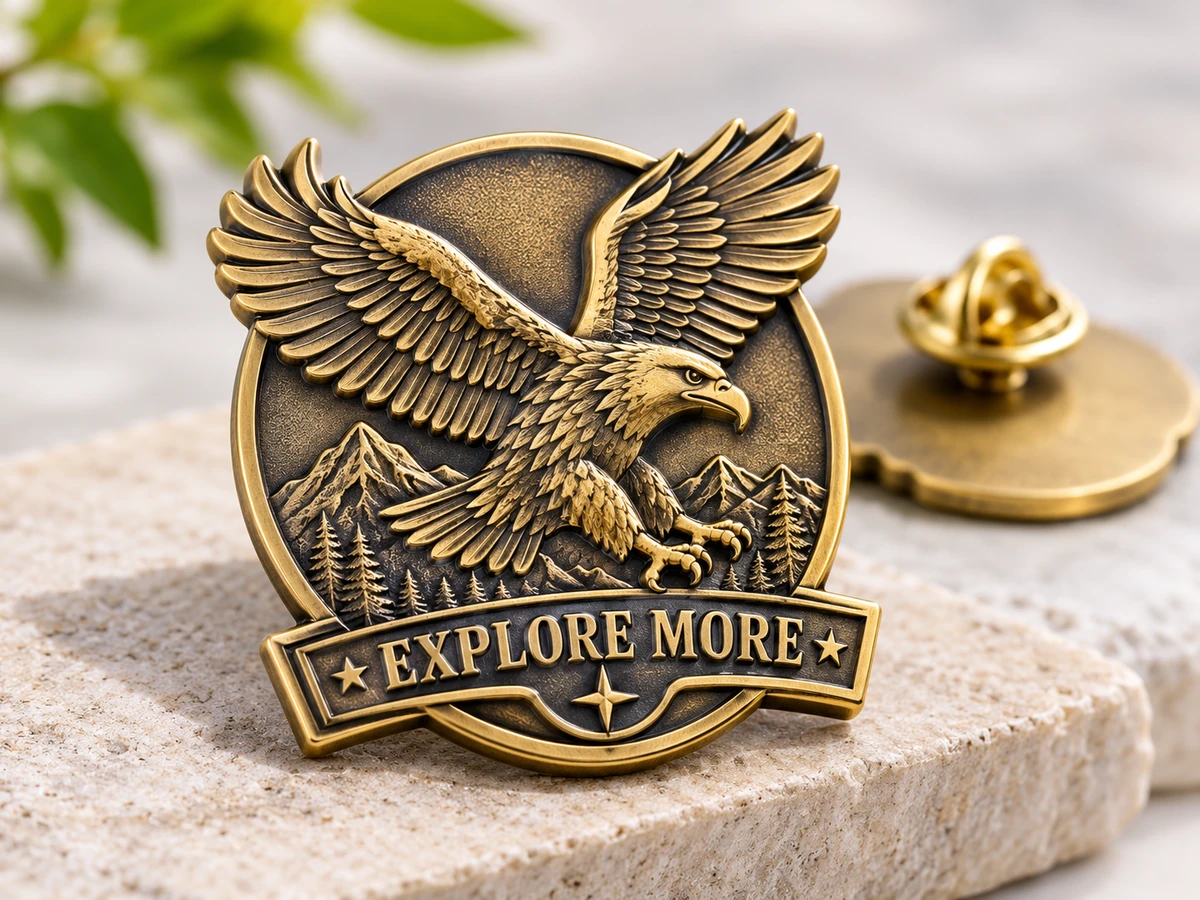
Choose clear raised logos, border lines and surface textures that remain legible at the final pin size. Very small wording or intricate art may need redesign or a separately quoted secondary process.
CUSTOMIZATION & SPECIFICATIONS
Confirm material, artwork, size, print and attachment details before sampling or quotation.
| Product Type | Custom die-struck-style metal lapel pins, metal-emblem badges and related collectible formats. Distinguish die-striking, stamping and die-casting using documented material and production specifications. |
|---|---|
| Artwork & Relief | Editable vector files, line art and clear high/low relief instructions are preferred; final relief depth, engraving width and text size depend on tooling capability. |
| Outline & Size | Custom round, shield, landmark or irregular outlines may be discussed. Actual thickness, edge profile and fine cutouts need a manufacturing drawing. |
| Base Metal & Process | Materials and forming methods vary with the design. Confirm the bill of materials and forming method rather than assuming universal brass, zinc or iron construction. |
| Surface Finishes | Metal-tone plating, antique treatments, selective polishing and matte textures are potential directions. We can review plating color, texture and surface finish on an approved sample. |
| Colour Treatment | Designed here as primarily metal-only relief, not an enamel-colour pin. If colour or painted areas are requested, treat them as an explicitly verified additional process. |
| Backing Options | Discuss butterfly clutches, rubber backs or locking pins based on buyer use, post alignment and retention requirements; verify handling safety and sample strength. |
| Packaging | Printed backing cards, recyclable sleeves where suitable and premium gift boxes can be sourced according to retail channel and destination market labelling requirements. |
| Quality Checks | Inspect metal relief definition, edge burrs, attachment security, finish uniformity, packing fit and approved artwork before bulk production. |
| MOQ & Lead Time | Share the size, finish, artwork, quantity and destination for a tailored quotation covering tooling, sampling, production and delivery. We can review any required documentation. |
ARTWORK & DESIGN FILES
For an accurate die-struck metal pin sourcing brief, share original or licensed vector artwork, reference images, required size, preferred raised/recessed texture, metal tone, quantity per design, pin backing, packaging, country of destination and target delivery date.
PRODUCT SELECTION GUIDE
Compare real product choices rather than selecting a finish by name alone.
Use die-struck metal textures for a sculptural monochrome character; choose an enamel route where filled colours are central to the artwork. A sample comparison helps buyers understand the difference.
Check the silhouette, level changes, line spacing, tiny lettering and the visibility of fine textures using life-size artwork rather than enlarged mockups.
The same design can read differently with darkened recesses or bright highlights. Require physical finish panels or sample pins rather than relying on illustrations.
Badge weight, clutch strength, card orientation and point-of-sale presentation affect perceived quality and handling. Verify the intended hardware on approved physical samples.
QUANTITY, SAMPLING & DELIVERY
Tell us your artwork and intended quantity. We review the suitable production route before confirming MOQ, sampling and scheduling.
Provide original or properly licensed artwork, motif, target pin size, destination country, quantity and intended channel or event.
Confirm whether the construction is die-struck, stamped or otherwise formed, including relief and outline limits.
Approve high/low metal levels, text and line details, edges, finish tone and any selective polishing before sample tooling.
Agree on post layout, clutch style, retail cards or presentation box and any applicable packaging labelling requirements.
Check tactile definition, edge finish, post security, appearance against artwork, metal tone and packing fit against the approved construction and sample.
Confirm project-specific tooling, unit price, MOQ, QC and delivery plans in writing before production or shipment.
APPLICATIONS & BUYERS
We review projects from different buyer groups according to the actual product and manufacturing requirements.
Create architectural, collection, exhibition or historic-symbol pin concepts with classic metallic relief and coordinated presentation cards.
Consider metal badges for staff recognition, anniversaries and event achievements with a formal look and appropriate securing hardware.
Explore original mountain, wildlife, compass and landmark motifs for retail, visitor centres and commemorative collections.
Translate authorised logos or original IP emblems into durable-looking metal relief concepts and coordinated collectible assortments.
PRODUCT DETAILS
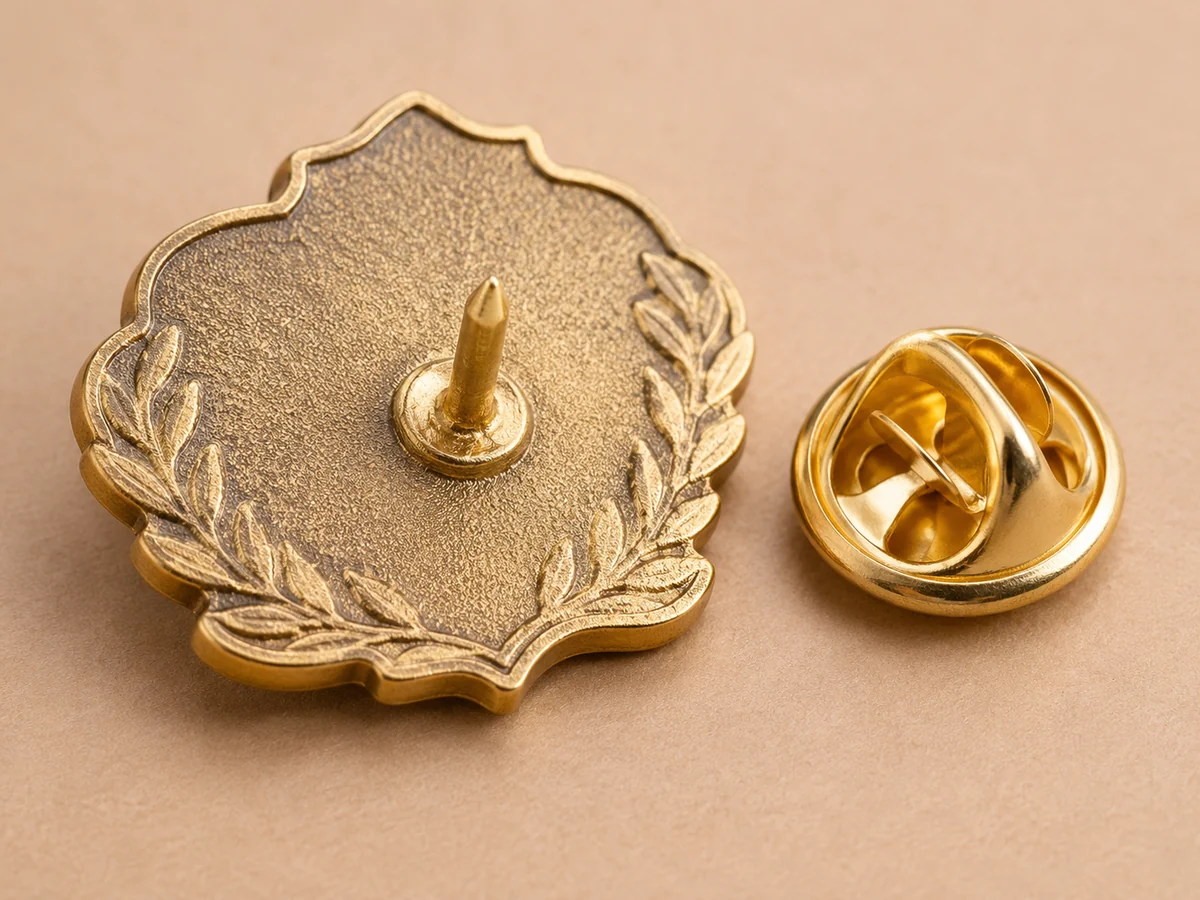
Confirm the actual back-post construction, pin-point cover, fastening type and clasp retention with physical samples; a visual illustration cannot prove strength or compliance.
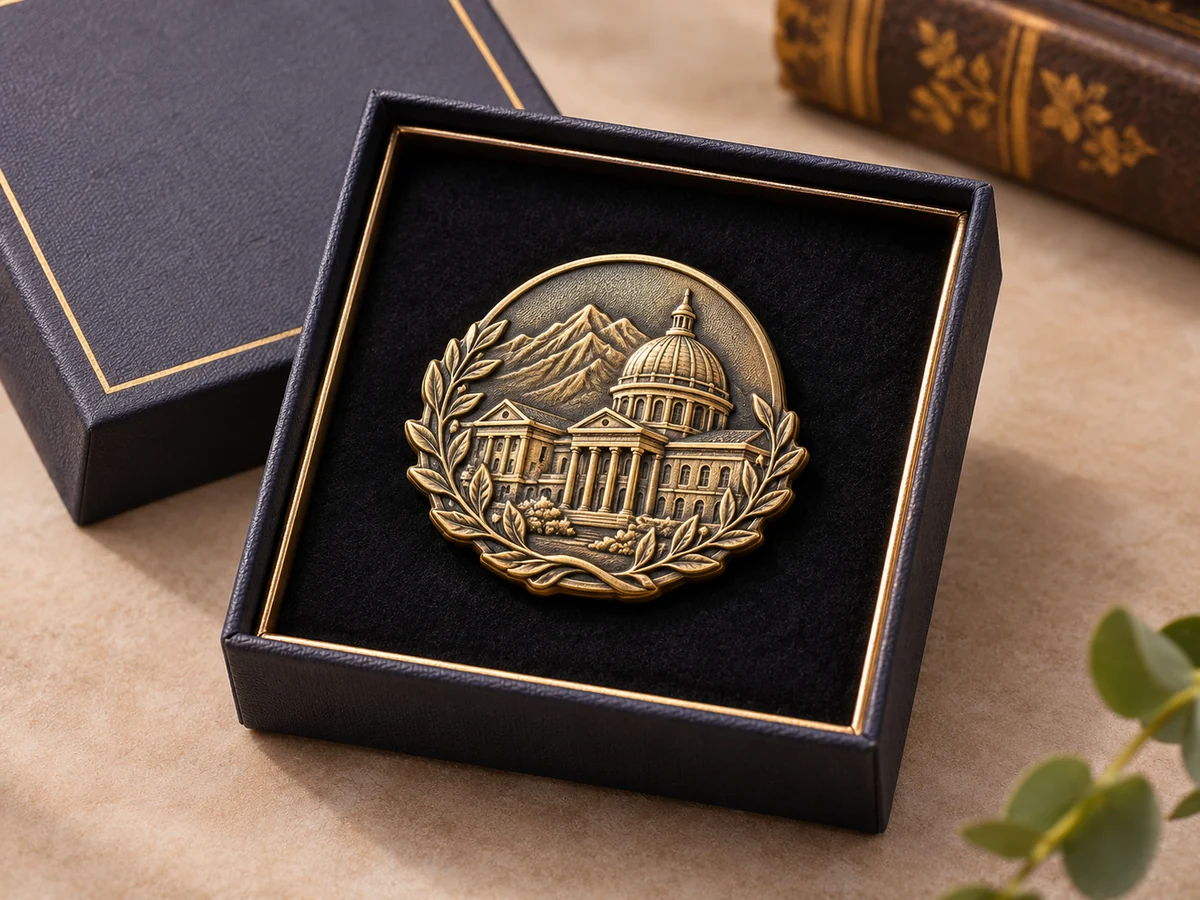
Coordinate branded backing cards, protective sleeves or presentation boxes with the buyer artwork and destination market. Printed colour, fit and labelling require sample sign-off.
FAQ
Practical answers to common questions about materials, artwork, order size and development.
A die-struck-style pin uses shaped tooling to create raised and recessed detail in metal, often highlighted by a polished or antique finish. We confirm the production method and material through specifications, technical documentation and a physical sample.
Metal-only die-struck designs rely mainly on relief and finish contrast, whereas soft and hard enamel styles use coloured filled regions. The better choice depends on artwork, tactile requirements and intended retail presentation.
Often, subject to tooling feasibility. Provide editable artwork; tiny lettering, narrow gaps and detailed shapes may need simplification before sampling.
Antique brass, silver-tone, copper-tone and polished options may be discussed through an agreed finish and sample review. Exact finishes, coating durability and colour consistency require sample approval.
No. Die-striking generally forms relief by pressing metal with tooling, while die-casting forms shapes by introducing molten metal into a mould. The actual production process must be documented.
You may specify preferred clutch styles, backing cards, sleeves and small boxes. Final compatibility, safe handling, quantity and price depend on the approved hardware and packaging specifications.
Send your artwork, size, finish, target quantity and delivery date so we can prepare a project-specific MOQ and production schedule.
Send original or licensed artwork, finished size, preferred metal relief and finish, quantity, backing, packing, destination country and requested delivery date.
RELATED PRODUCTS
Compare metal-only stamped relief with recessed soft enamel and smoothly polished hard enamel, then coordinate a consistent collectible assortment.
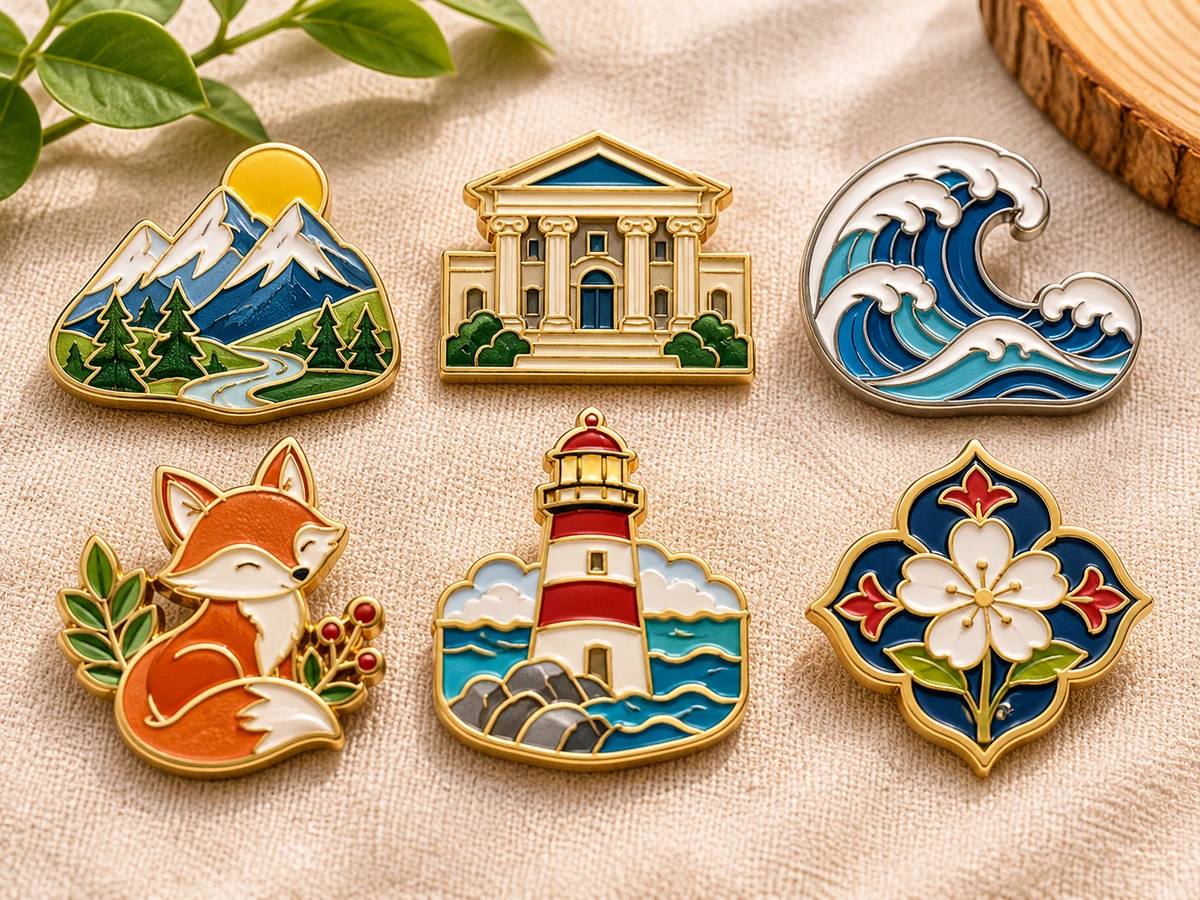
Explore the broader pin family and other production styles.
View product details →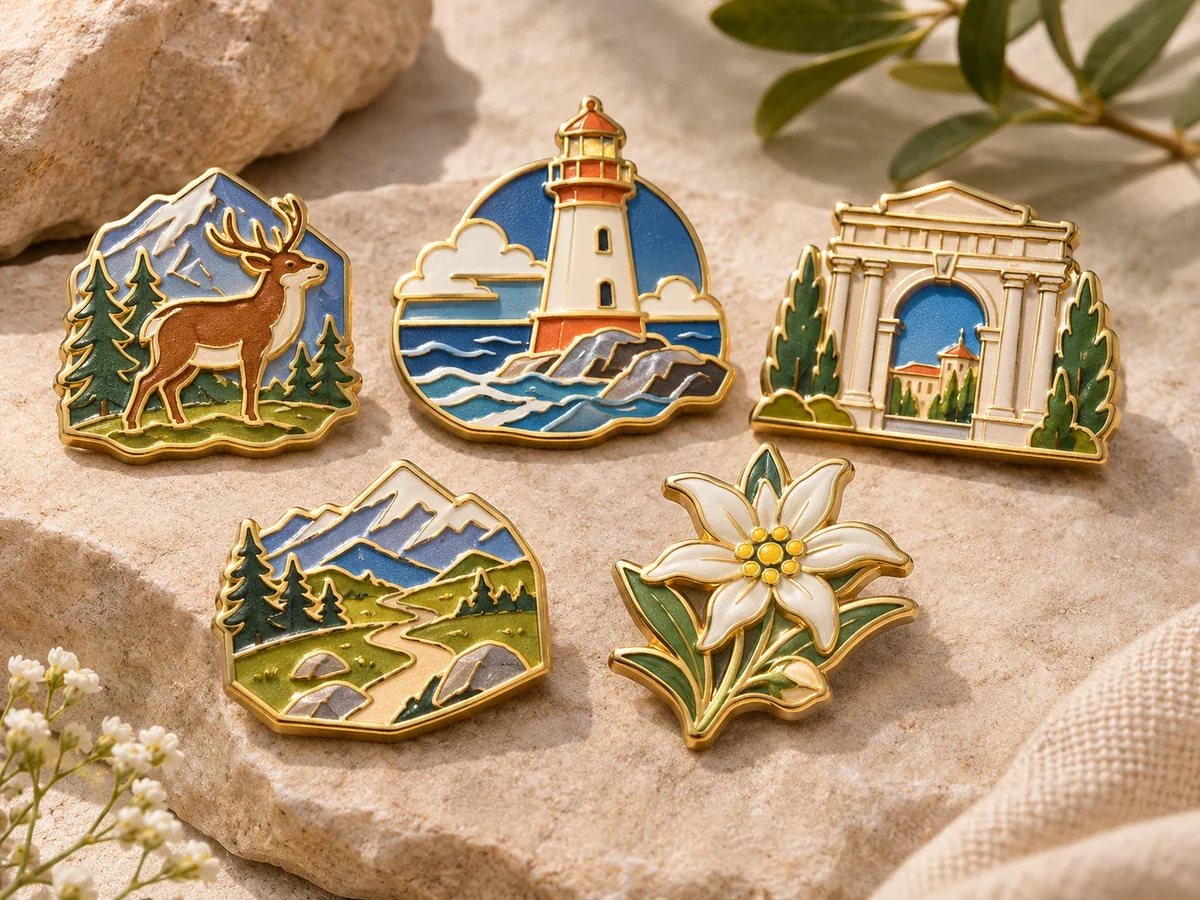
Raised metal lines and recessed filled colours for tactile branded collections.
View product details →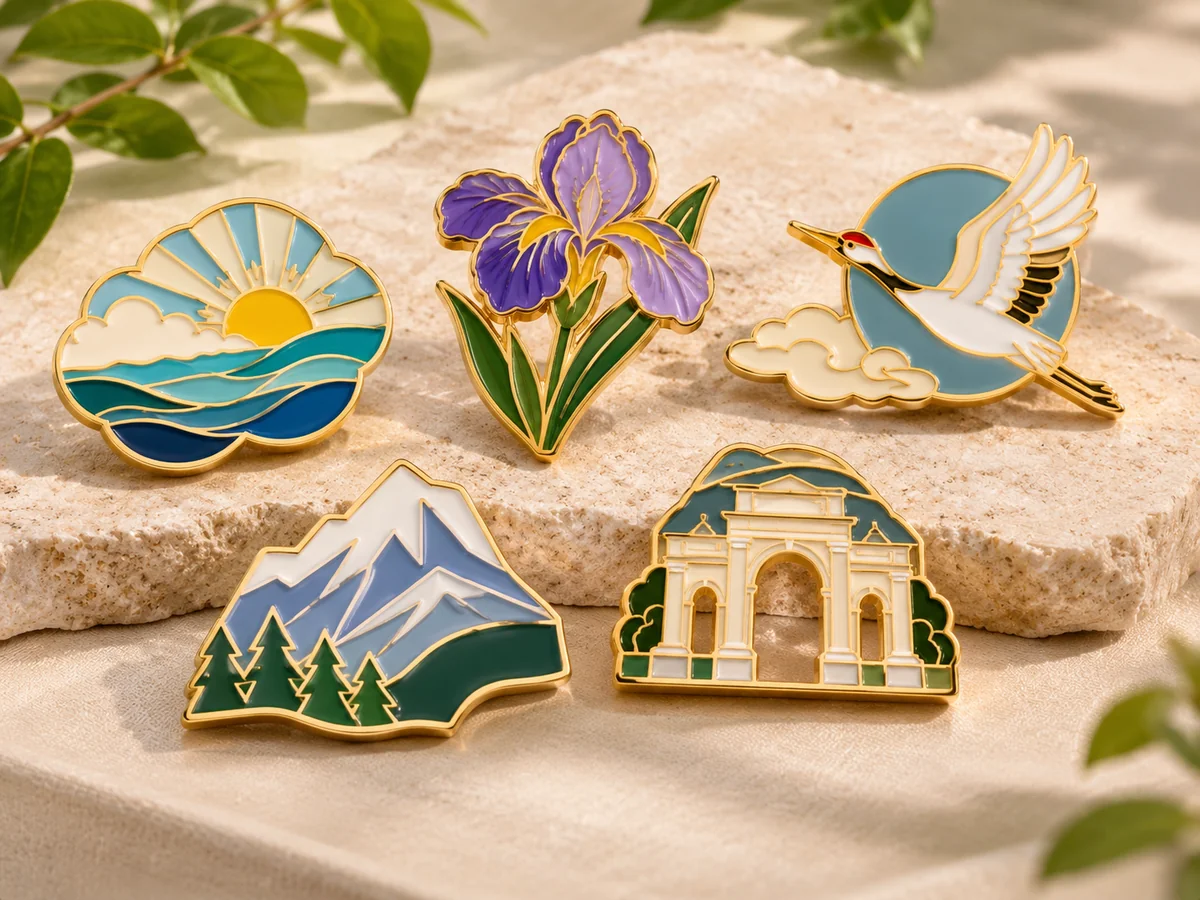
Smooth enamel colour with polished metal borders for premium-looking lapel pins.
View product details →START YOUR PROJECT
Share your artwork or idea, intended quantity, approximate size and destination. We can help review the product specification and sourcing options.