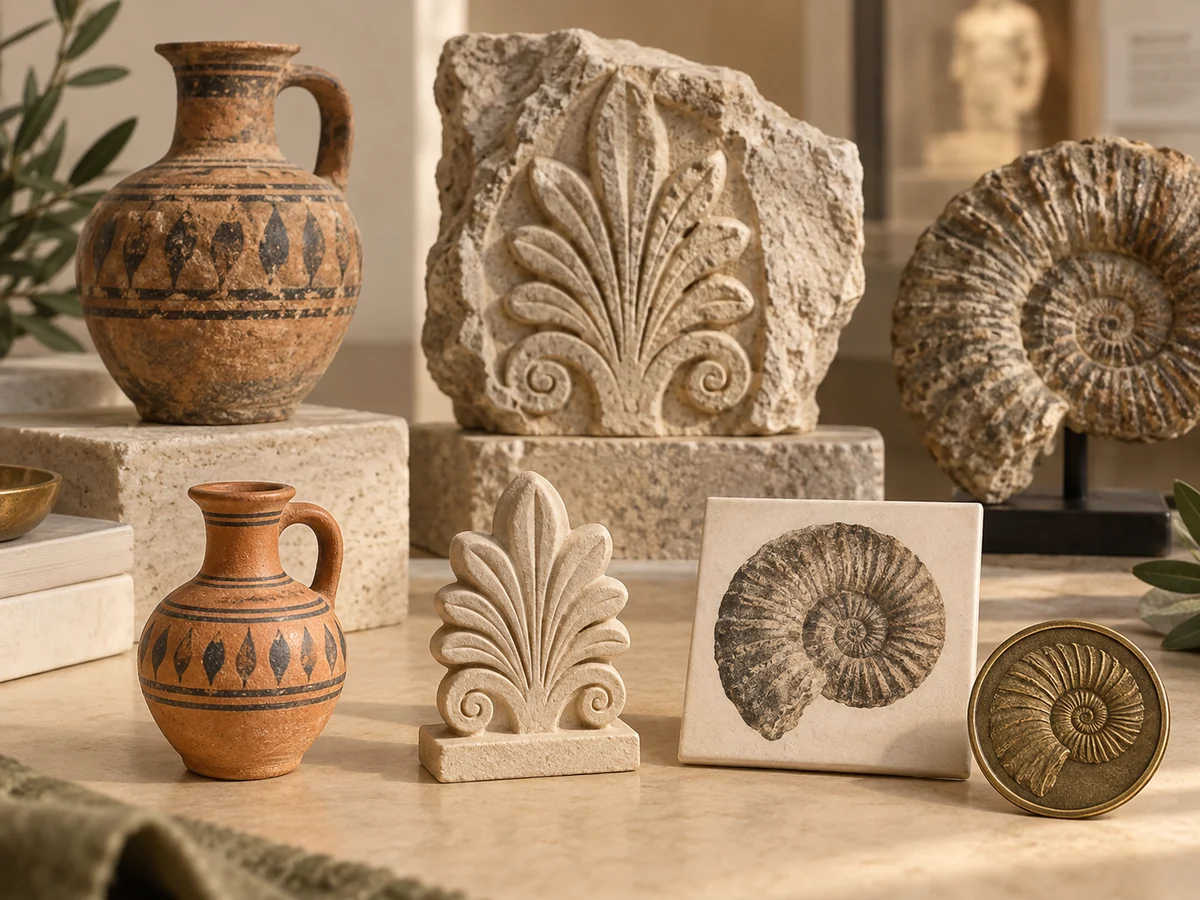
A museum gift shop can serve two different retail needs at the same time.
One is the ongoing assortment: merchandise inspired by a museum's permanent collection, institution, architecture or wider cultural identity.
The other is an exhibition-specific assortment, designed around a particular event, artist, theme or temporary display.
Both may include magnets, bookmarks, pins, tote bags, stationery and collectible gifts. But they should not automatically follow the same purchasing plan.
An exhibition has an opening date and often a fixed closing date. A permanent museum shop needs products that remain relevant, can be replenished and support visitors throughout the year.
That difference affects purchasing quantities, design approvals, licensing, supplier selection, sample schedules, packaging and the treatment of unsold inventory.
For museum store buyers and merchandise coordinators, understanding the two purchasing models makes it easier to prepare useful supplier briefs and avoid committing to product quantities that do not fit the actual selling opportunity.
1. Two Different Selling Windows Require Different Buying Decisions
The first question is not which souvenir products to manufacture.
It is how long those products will have a realistic opportunity to sell.
An exhibition-specific item may be closely connected to an opening, a visiting collection or a time-limited cultural programme.
A permanent museum product can remain relevant after a particular exhibition has ended, although its commercial performance will still depend on demand and retail conditions.
A special exhibition may create a strong reason to purchase an item immediately. However, the same design may be difficult to sell later if it prominently includes an exhibition name, year or closing date.
A permanent assortment can take a different approach.
Products inspired by museum architecture, an enduring collection theme or the museum's approved visual identity may support a longer retail life.
This does not mean every permanent product is automatically successful or every exhibition product must disappear after the closing date.
It means buyers should define the sales window and future uses before deciding how much stock to order.
2. Temporary Exhibition vs Permanent Museum Shop: A Practical Comparison
The following framework separates the key purchasing decisions.
| Purchasing factor | Temporary exhibition merchandise | Permanent museum shop collection |
|---|---|---|
| Main purpose | Support a specific exhibition or visitor experience | Maintain an ongoing museum retail offer |
| Selling window | Usually tied to exhibition dates | Potentially longer-term |
| Artwork direction | Exhibition title, featured objects or approved theme | Permanent collection, architecture or institution |
| Product selection | Focused assortment suited to the event | Broader range with established product roles |
| Opening inventory | Must be ready for the relevant launch | Can be developed or refreshed in phases |
| Replenishment | Limited by remaining exhibition time | Repeat ordering may be an important requirement |
| Main inventory risk | Unsold exhibition-specific stock | Slow-moving or obsolete ongoing stock |
| Rights review | May involve exhibition-specific permissions | May involve continuing permissions and repeat use |
| Packaging | Often tied to exhibition artwork or identity | May use more consistent museum branding |
| Supplier priority | Feasibility against the event schedule | Consistency and repeat-order capability |
Neither model is universally better.
A museum may combine exhibition merchandise with continuing products to create a more flexible assortment.
The practical goal is to match purchasing commitments to the life of each product.
3. Forecast Exhibition Demand Before Deciding the Order Quantity
A temporary exhibition creates a particular inventory challenge.
The buyer must decide what to purchase before knowing exactly which designs visitors will prefer.
Visitor forecasts can help, but total exhibition attendance should not be confused with merchandise demand.
Not every visitor enters the shop. Not every shop visitor makes a purchase. And purchasers may choose existing products instead of special exhibition items.
A practical demand discussion can therefore begin with several separate assumptions:
- Expected attendance during the exhibition.
- Historical shop conversion information, if available.
- Comparable past exhibitions and their relevant product sales.
- The likely audience, including families, specialists or tourists.
- The proportion of visitors likely to encounter the shop.
- The relative roles of exhibition-specific and regular merchandise.
- Product price levels, available shelf space and competing items.
Where the museum has previous sales data, use it to establish scenarios rather than assume a single perfect forecast.
Where reliable data is unavailable, document the uncertainty.
Suppliers should be asked whether quantities can be divided by design, whether alternative constructions are available and whether replenishment is feasible.
A higher unit quantity may reduce an individual product's quoted price, but that saving can be outweighed by merchandise that remains unsold after the exhibition.
The appropriate quantity is a commercial decision based on the full selling window, not simply the lowest factory quotation.
4. Keep the Exhibition Product Range Focused
A temporary exhibition does not necessarily need a large number of custom product formats.
A focused assortment can often communicate the exhibition more clearly and reduce the number of separate artwork, sample and packing approvals.
Possible roles include:
Accessible keepsakes: Magnets, postcards, bookmarks or small badges can provide compact ways for visitors to remember the exhibition.
Functional merchandise: Tote bags, notebooks, stationery or other practical products may be suitable when the artwork and audience justify them.
Collectible items: Pins, coins, ornaments or limited design series can work where collectability fits the exhibition theme.
Educational merchandise: Selected books, printed resources, kits or learning-related products may support the subject of the exhibition.
Special presentation items: A more developed gift set or commemorative product may be appropriate for a particular audience or event.
These are possible assortment roles, not guaranteed sellers.
Each product should have a clear purpose within the exhibition and a realistic manufacturing route.
For the broader question of how to structure a museum assortment, see our guide to building a museum gift shop merchandise collection.
5. Build the Procurement Schedule Backward From the Opening Date
For an exhibition project, a supplier's production lead time is only one part of the schedule.
The product may also require artwork review, rights clearance, physical sampling, curatorial approval, packaging, production, inspection, freight and receiving.
Buyers should work backward from the date the merchandise must be available for sale.
A practical sequence is:
- Confirm the exhibition opening date and intended selling period.
- Determine which merchandise is required for opening day.
- Identify artwork ownership, rights and curatorial approval requirements.
- Define product formats, approximate specifications and quantities.
- Request supplier feasibility and quotation options.
- Review artwork proofs and physical samples.
- Approve the final specification and production files.
- Complete production, packaging and required quality checks.
- Arrange shipping, customs procedures where applicable and receiving.
- Prepare the products for display before the required retail date.
Every step should be assigned a responsible party.
Some steps can overlap, but that should be intentional rather than assumed.
For projects involving overseas production, buyers should also consider the destination market, freight method, import arrangements, holidays and potential delays.
The actual timetable must be confirmed against the project's product complexity and supplier availability.
Do not assume that a digital artwork approval means the physical product is ready for production.
6. Replenishment Has a Different Meaning for a Temporary Exhibition
Reordering a successful product is useful only if additional stock can arrive while there is still a viable selling opportunity.
For a permanent shop, the buyer may be able to place repeat orders around continuing demand.
For an exhibition, that opportunity can be much narrower.
Before approving initial quantities, ask:
- How long would an equivalent repeat order take?
- Is the original artwork and approved specification retained?
- Would tooling or setup charges apply again?
- Can packaging be reordered separately?
- Is the supplier able to produce the same finish consistently?
- When is the latest practical date for placing a repeat order?
- Would replenished stock still be useful after the exhibition closes?
A practical reorder checkpoint should consider remaining exhibition days, expected sales during the remaining period and the time needed for the merchandise to reach the shop.
The decision should also account for any permitted post-exhibition sales.
A repeat order made solely because an item initially sells well can create unnecessary leftover stock if the delivery timing is wrong.
For permanent shop collections, keep records of successful specifications, production files, approved samples and prior supplier quotations so the next order can be evaluated more efficiently.
7. Artwork and Licensing Need Their Own Approval Process
Museum merchandise may reproduce collection objects, exhibition graphics, images, names or other protected material.
Ownership of a physical object does not necessarily mean ownership of every copyright or merchandising right connected to it.
Rights may involve an artist, estate, lender, photographer, design agency, museum or other rights holder.
Permission to show an artwork in an exhibition should not automatically be treated as permission to reproduce that artwork on merchandise.
Before supplier production, the museum or authorized buyer should clarify:
- Who has authority to approve the artwork?
- Is commercial merchandising use permitted?
- Which product categories are covered?
- Which territories and distribution channels are permitted?
- Are quantities or production periods restricted?
- Is online sales use included?
- Is a credit line or other identification required?
- Can the design be sold after the exhibition closes?
- Can it be used at another venue if the exhibition travels?
- Does each product proof require approval?
These are commercial planning questions, not legal conclusions for a specific artwork.
Where rights are uncertain, the institution should obtain appropriate professional or rights-holder guidance.
For example, the Museum of Fine Arts, Boston describes written permission and product design approval requirements for its merchandise licensing programme.
Reference: Museum of Fine Arts, Boston — Merchandise Licensing
The museum buyer should supply suppliers with the approved artwork and its permitted use conditions.
A sourcing partner should not assume that an image provided for quotation is automatically cleared for production.
8. Should Exhibition Packaging Be Different From Permanent Shop Packaging?
Packaging can connect an ordinary product format to the story of an exhibition.
A bookmark, magnet or tote bag may use packaging that explains a featured object, identifies the exhibition or presents the museum's approved visual identity.
However, exhibition-specific packaging can reduce the usefulness of remaining products after the event ends.
A backing card printed with exhibition dates may be difficult to reuse.
A product using a more enduring museum or collection identity may remain appropriate for ongoing retail, subject to rights and commercial demand.
Buyers can consider whether:
- The product itself should carry exhibition-specific artwork.
- A removable backing card should carry the exhibition identity.
- General museum packaging is appropriate.
- Product information or credit lines must appear on the packaging.
- Different design versions require separate packing.
- Retail display equipment and storage support the chosen format.
Separating a product from some packaging elements may create flexibility.
It does not automatically make the design evergreen or resolve any artwork licensing restriction.
Packaging decisions should also reflect protection, labeling obligations and practical retail presentation.
9. Touring Exhibitions Add Another Layer of Procurement Planning
Some exhibitions move between museums or venues.
That can extend the potential selling opportunity, but it also changes the buying arrangements.
The organiser and participating venues need to decide who purchases the merchandise and how inventory moves.
Questions may include:
Central purchasing: Will one organisation place an order covering multiple venues?
Venue-specific purchasing: Will each museum place its own order based on forecast attendance and shop requirements?
Artwork and identity: Will the same packaging work at every venue, or does the product require venue-specific information?
Inventory transfer: Who stores, counts and transports merchandise between locations?
Rights: Does permission cover reproduction, sale and promotion at all participating venues?
Receiving: What delivery quantities and schedules does each venue require?
Leftover stock: Who owns it and decides what happens after the final venue?
For touring exhibitions, a common product specification with venue-specific packaging may sometimes simplify coordination.
Whether this is practical depends on the products, rights agreements, suppliers and individual retail requirements.
10. Decide What Happens to Unsold Stock Before Placing the Order
Temporary exhibition merchandise should have a documented end-of-exhibition plan.
Possible outcomes depend on the product, rights and commercial arrangements.
An item may be suitable for continued sale in the museum's permanent shop.
Some products may be appropriate for the institution's online store or another authorized venue.
Others may be tied too closely to a date, event or restricted artwork to remain on sale.
Buyers should agree in advance which possibilities exist.
Questions to record include:
- Does the museum own the unsold stock?
- Can merchandise be transferred to another location?
- Does the contract allow product returns or sale-or-return arrangements?
- Are there restrictions on discounting or continued promotion?
- Is post-exhibition online selling allowed?
- Are product credits or labels still appropriate?
- Will the packaging make the item appear outdated?
- Are storage costs justified by a realistic future sales opportunity?
A permanent shop also needs inventory controls, but temporary exhibition products carry a particularly visible deadline.
The correct approach should be based on documented rights, supplier terms and demand assumptions—not an assumption that leftover stock can always be sold somewhere else.
11. Prepare Separate Supplier Briefs for Exhibition and Permanent Merchandise
A supplier cannot recommend a suitable production route without knowing how the product will be used and sold.
The same museum artwork may result in different sourcing requirements depending on the retail programme.
The following comparison can help buyers prepare clearer requests.
| RFQ field | Temporary exhibition project | Permanent museum shop project |
|---|---|---|
| Retail purpose | Named exhibition or specific event | Ongoing institutional or collection merchandise |
| Required launch | Exhibition opening or specified event date | Planned launch or range refresh |
| Artwork | Approved exhibition graphics or objects | Approved collection or museum imagery |
| Number of designs | Focused and event-relevant | Defined by continuing assortment plan |
| Quantity | Based on finite selling window and scenarios | Based on initial order and possible repeat demand |
| Supplier feasibility | Opening deadline and sample approval are critical | Reorder consistency and supply continuity matter |
| Packaging | Exhibition and rights conditions | Longer-term visual identity where appropriate |
| Rights information | Exhibition dates, channels and post-event use | Ongoing use and reorder permissions |
| Inspection | Product and retail-pack acceptance | Product acceptance plus future repeat consistency |
| Logistics | Must support the launch | Must support launch and possible replenishment |
This is a procurement planning framework, not a promise of specific factory quantities or timelines.
For a more general sourcing request, see the custom product RFQ information checklist.
12. Example: Planning Two Merchandise Ranges for One Museum
Consider a hypothetical museum preparing a temporary exhibition while maintaining its regular gift shop.
This is an illustrative planning scenario, not a CALDVANE customer case.
The temporary exhibition focuses on an approved group of artworks.
The museum wants a small collection of exhibition-related bookmarks, magnets and enamel pins.
The buyer prioritizes the opening deadline, artwork clearance, physical samples and the ability to sell most inventory during the exhibition period.
The permanent shop continues to offer museum architecture gifts, collection-inspired stationery and other ongoing merchandise.
For these products, the buyer gives more attention to repeat-order records, consistent packaging, approved evergreen designs and stock replenishment.
Some manufacturing processes or suppliers may be suitable for both ranges.
However, the two purchasing plans should remain distinguishable.
The exhibition merchandise needs a clear stop or reassessment point.
The permanent assortment needs a realistic system for monitoring demand and replacing products.
The museum may also consider whether any items can responsibly serve both purposes, provided the artwork, rights, packaging and retail relevance support that decision.
The useful outcome is not necessarily two completely separate product catalogues.
It is one coordinated museum retail strategy with two appropriate purchasing approaches.
13. A Practical Museum Merchandise RFQ Checklist
Before contacting a sourcing or product-development partner, prepare the following information.
Institution or project: Museum name or project reference.
Retail programme: Temporary exhibition, permanent store collection or combined programme.
Exhibition details: Opening date, closing date and venues where applicable.
Target audience: Expected visitor profile and purchasing context.
Product direction: Proposed magnets, pins, bookmarks, bags, stationery, ornaments or other formats.
Artwork: Approved reference files or early concepts, clearly identified.
Rights status: Confirmed permissions, unresolved approvals or applicable restrictions.
Design variants: Number of artwork versions under consideration.
Estimated quantities: Per product and per design, with uncertainties stated.
Packaging: Retail card, sleeve, box, gift set or undecided.
Destination market: Delivery country and venue arrangements.
Required dates: Sample approval and intended delivery milestones.
Replenishment: Whether future orders may be required and the expected selling window.
Testing or labeling: Any known destination-market or institution-specific requirements.
Quotation requirements: Ask suppliers to identify feasible product construction, artwork requirements, MOQ, tooling, sample costs where applicable, packaging assumptions, production timing and shipping responsibilities.
If the museum has not finalized every detail, it can still share its requirements and ask the sourcing partner to evaluate alternatives.
The important distinction is between confirmed requirements and information that remains open for development.
Frequently Asked Questions
Should temporary exhibitions have fewer merchandise products than permanent museum shops?
Not necessarily, but a focused range can reduce complexity when the selling window is limited. The appropriate assortment depends on visitor demand, exhibition content, retail capacity, sourcing requirements and budget. Permanent shops may support broader ranges because some products have longer commercial relevance.
Can exhibition merchandise continue selling after the exhibition closes?
Sometimes. It depends on artwork rights, licensing terms, product relevance, packaging, retail channels and the museum's commercial decisions. A product that is physically suitable for further sale may still be subject to rights or contractual restrictions.
Is custom merchandise too risky for a short museum exhibition?
Not automatically. The feasibility depends on product construction, artwork readiness, approvals, order quantity, supplier lead time and the available sales window. Early specification review can help determine whether a custom product, adapted existing format or readily available item is more practical.
Can the same artwork be used for exhibition and permanent collection merchandise?
Potentially, if the artwork and rights conditions allow it. The buyer should review whether the design remains relevant after the exhibition and whether the intended product, quantity, territory and sales period are authorized.
How should a museum plan replenishment during an exhibition?
Consider remaining selling time, demand data, the supplier's confirmed repeat-production schedule and delivery arrangements. A reorder is useful only when additional stock can arrive in time for a commercially viable selling opportunity or another permitted channel.
What can CALDVANE help with for museum merchandise projects?
CALDVANE supports overseas B2B buyers with product specification development, suitable supplier sourcing, artwork coordination, sampling, packaging and production planning in China. Museums and merchandise teams can share their concept, exhibition schedule, product direction and estimated quantities for review.
Plan Museum Merchandise Around the Real Retail Opportunity
Temporary exhibitions and permanent museum shops may sell similar product formats, but their purchasing decisions are not identical.
Exhibition merchandise needs particular attention to launch timing, finite demand, artwork permissions and unsold stock.
Permanent assortments may place greater emphasis on product continuity, repeat ordering, ongoing relevance and consistent retail presentation.
A practical buying plan starts with the museum's commercial and cultural objectives, then translates those requirements into specifications that suppliers can evaluate.
CALDVANE helps overseas museum retailers and merchandise teams coordinate custom gift and souvenir development with suitable manufacturing partners in China.
Share your proposed exhibition or collection theme, available artwork, target products, quantities, packaging direction and required timing to discuss a sourcing and product-development project.